
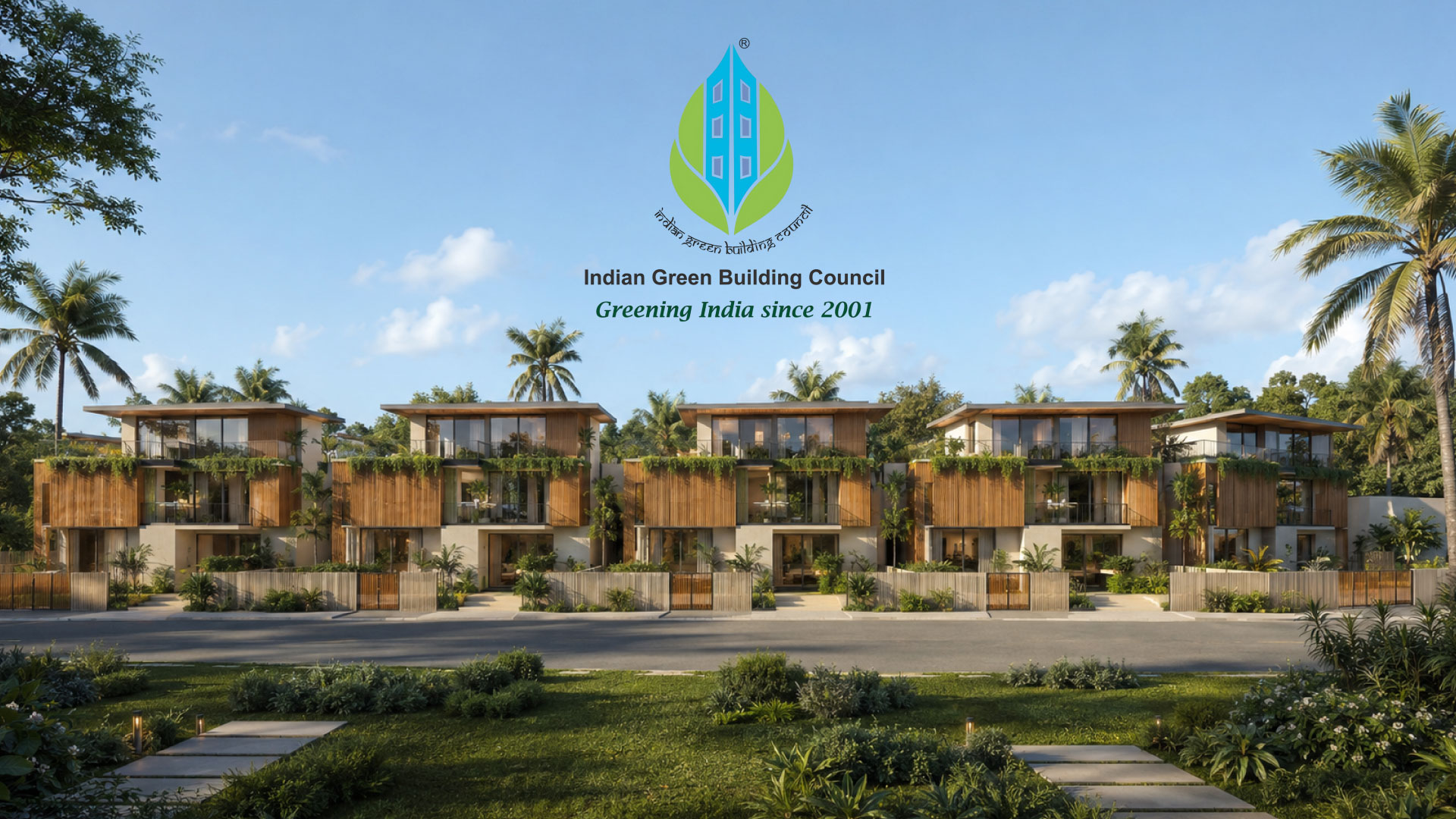
Alibaug is genuinely hard to explain to someone who has not stood on its shore at six in the morning, watching the Arabian Sea catch the first light while the coconut palms do absolutely nothing in the stillness. It is one of those rare places that still feel like its connected to our primitive natural world. And that is precisely what is at stake. As more people discover this coastline, the way we build here will determine whether that quality survives, for the people who live here now, for the communities around them, and for whoever visits this stretch of coast next.
IGBC Certification is one of the clearest ways a building can take that responsibility seriously. As Alibaug matures into one of India’s most sought-after second-home markets, the projects pursuing it are worth paying attention to.
What Is IGBC Certification?
The Indian Green Building Council, established in 2001 under the Confederation of Indian Industry (CII), is India’s premier green building certification body. It operates a voluntary, consensus-based rating system that measures how sustainably a building is designed, constructed, and operated.
To date, IGBC has registered over 19,330 projects covering a green footprint of more than 15.90 billion sq. ft. across the country. It is also a founding member of the World Green Building Council, participating in global sustainability conversations at forums like COP.
When a building earns IGBC Certification, it means the structure has been independently assessed across six key areas:
- Site Selection and Planning: Responsible land use, reducing ecological disruption
- Water Conservation: Rainwater harvesting, recycling systems, low-flow fixtures
- Energy Efficiency: Energy-efficient design, lighting, and systems that cut consumption
- Materials and Resources: Use of sustainable, low-impact building materials
- Indoor Environmental Quality: Healthy air, natural light, non-toxic finishes
- Innovation and Design: Features that go beyond standard benchmarks
Understanding the Rating Structure
IGBC awards ratings at four levels for residential projects under its Green Homes programme:
| Level | Score Range | What It Signifies |
| Certified | 50 to 59 | Best Practices |
| Silver | 60 to 69 | Outstanding Performance |
| Gold | 70 to 79 | National Excellence |
| Platinum | 80 to 100 | Global Leadership |
Why Does IGBC Certification Actually Matter?
According to IGBC’s official data, certified buildings collectively save 66.4 billion units of energy per year, conserve 199.3 billion litres of water annually, and reduce CO2 emissions by 53.1 million tonnes every year. These are documented outcomes across thousands of operational buildings.
For individual homeowners, this means lower utility costs from the day you move in, and that advantage compounds over the lifetime of the building. The health benefits are equally real. Controlled indoor air quality, natural ventilation, and the absence of toxic building materials make a measurable difference to how you feel in a space day after day.
From an investment standpoint, the picture is just as clear. Green-certified properties command stronger resale interest, and several state governments in India offer incentives such as reduced property taxes and expedited approvals to IGBC-registered projects.
How is IGBC certification perceived in the market? Among architects, developers, and informed buyers, it signals one thing clearly: the builder did not take shortcuts. It is a third-party stamp that the project went through scrutiny, not just marketing.
Why This Matters Specifically for Your Alibaug Villa
Alibaug has always had the coast and the roughly 19-minute speedboat ride from Mumbai’s Gateway of India that makes the whole proposition so compelling. What it now increasingly has is buyers who know the difference between a holiday home and a genuinely considered heirloom asset.
When you are investing at this level, in a coastal location with inherent sensitivities around water, energy, and ecology, the construction approach matters enormously. An IGBC-approved villa is one where those sensitivities have been actively addressed. The building works with its environment rather than simply sitting in it.
The Sands by Aroha Estates: IGBC Certified Villas in Alibaug
Among the new generation of villa projects on this coastline, The Sands by Aroha Estates stands apart in a few specific ways. Designed by internationally acclaimed architect Sanjay Puri, the project has a IGBC certification, making it one of the rare IGBC Certified Villas in Alibaug pursuing this standard at the villa level.
It is located just 500 metres from Sasawane Beach, with the Mandwa Jetty within close reach. This is one of Alibaug’s most storied stretches of coast, where prominent names have long chosen to put down roots.
The villas themselves are exquisite. Each comes with a private pool. The G+2 structure uses clean lines, expansive windows, and open interiors that draw in natural light and coastal air, the kind of architecture built to last and to feel good over years, not just at possession.
Beyond the villas, residents have access to a branded clubhouse with a café and lounge, gymnasium, spa, pickleball court, children’s play area, and landscaped gardens. The community operates with 24/7 concierge services and a secure gated entrance.
What the IGBC pursuit adds to all of this is a layer of substance. It means the construction materials, energy systems, water management, and site planning have been held to a standard that most coastal villa projects in India simply do not reach.
Ready to Take a Closer Look?
The Sands by Aroha Estates sits at the intersection of everything Alibaug does best, and everything a considered investment should be. Beach access, privacy, world-class architecture, and a genuine commitment to sustainable practices.
If you are ready to explore further, visit thesands.life to view the villas, amenities, and location in detail, the team at The Sands is available here.
FAQs
- Does an IGBC-approved villa cost more to buy than a conventional one?
Yes, higher construction standards around materials, systems, and design do reflect in pricing. That said, lower operating costs over the building’s lifetime and stronger resale interest tend to make the premium worthwhile for buyers thinking long term.
- Can I verify a project’s IGBC status independently before buying?
Yes. IGBC maintains records of registered and certified projects on its official portal at igbc.in. You can also ask the developer directly for certification or precertification documentation, which is the relevant reference for projects still under construction.
- What is the difference between IGBC and other green building ratings like LEED?
LEED is a US-based international rating system. IGBC’s rating systems are developed specifically for Indian conditions, climate zones, materials, and national standards, which makes them more directly applicable to properties here.
- Does IGBC certification have to be renewed?
Precertification is valid for three years from the date it is awarded, with project status updates required every six months during construction. Final certification is assessed separately once the building is complete, and recertification applies if a project wishes to maintain its rated status thereafter.